×
03 Nov 2026
YCB LEVEL 1 | PRACTICAL EXAM GUIDE
The YCB Level 1 practical exam evaluates foundational skills for aspiring Yoga Protocol Instructors, including safe practice, clear instructions and effective session delivery.
In this guide:
Successful preparation requires more than memorizing asana names. Candidates should develop teaching skills, understand precautions and organize a safe, structured yoga session.
The Yoga Protocol Instructor qualification concerns foundational yoga instruction, including the Common Yoga Protocol. The published syllabus covers yoga philosophy, foundational practices, health promotion and methods of teaching yoga.
The assessment carries 200 maximum marks, divided between theory and practical components:
| Examination component | Maximum marks |
|---|---|
| Theory examination | 60 |
| Practical examination | 140 |
| Total | 200 |
The practical examination covers demonstration skills, teaching skills, application of knowledge and field experience. Candidates should confirm current procedures with their authorized assessment provider.
Understanding the marks helps candidates prepare for the entire assessment rather than concentrating exclusively on asanas.
| Assessment component | Maximum marks |
|---|---|
| Demonstration skills | 80 |
| Teaching skills | 40 |
| Application of knowledge | 10 |
| Field experience | 10 |
| Total practical | 140 |
Prepare Sukshma Vyayama, Sthula Vyayama, Surya Namaskara, selected asanas, preparatory breathing, pranayama, mudras and meditation-related practices as specified in the syllabus. Focus on terminology, preparation, breathing coordination, appropriate execution and precautions.
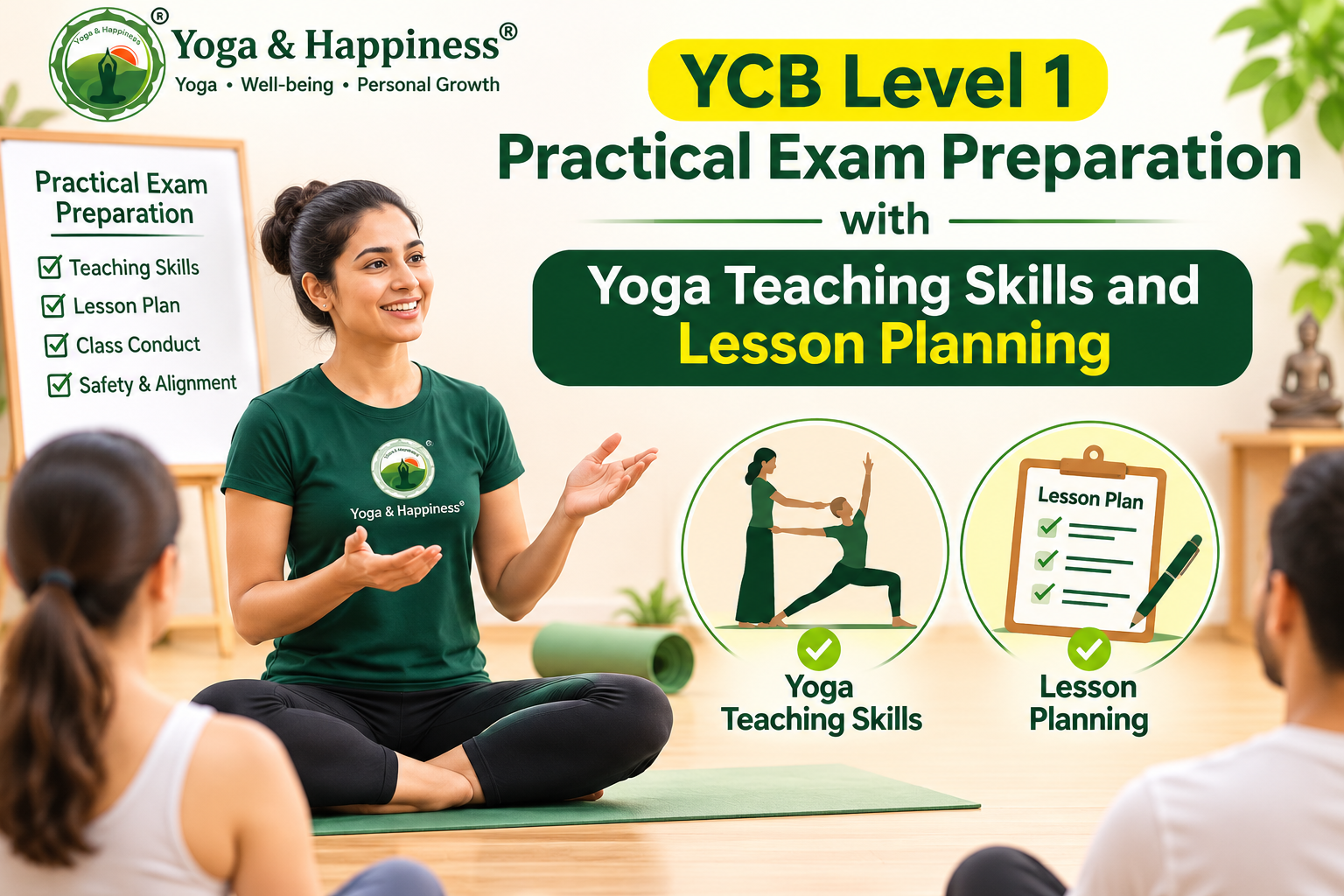
Practise lesson planning, preparation for teaching, class management, appropriate instruction for different groups and relevant precautions. A candidate should be able to give clear instructions and organize a beginner-friendly class.
Connect theoretical understanding with practical teaching situations. For example, explain when a practice may require modification or when an alternative may be suitable. These are suggested preparation exercises, not confirmed exam questions.
Field experience forms part of the published practical structure. Maintain accurate records of supervised teaching practice where required and confirm documentation requirements with the authorized examination provider.
A competent instructor does not simply demonstrate a posture and ask participants to copy it. Effective teaching requires preparation, observation, communication and professional responsibility.
Give short, understandable cues. In Tadasana, begin by asking participants to stand comfortably, distribute weight evenly and breathe naturally. Add details gradually rather than giving too many instructions at once.
Demonstrate movements when useful and remain visible to participants. A demonstration should support understanding rather than display advanced flexibility. Continue observing the class.
Participants differ in ability, health history and experience. Modify or omit practices where appropriate. Pain, dizziness or unusual discomfort are reasons to stop and reassess, not to push through.
Check space, equipment, pace and participant readiness. For online teaching, consider camera visibility, clear communication and whether participants can follow the session safely.
Lesson planning is part of the YCB Level 1 teaching skills syllabus. A useful plan identifies participants, learning objectives, selected practices, sequence, time allocation and safety considerations.
| Duration | Practice | Teaching objective |
|---|---|---|
| 2 minutes | Introduction and participant check-in | Establish readiness and explain the session |
| 3 minutes | Gentle neck, shoulder and ankle movements | Introduce comfortable mobility |
| 5 minutes | Tadasana and modified Vrikshasana | Teach standing awareness and balance |
| 4 minutes | Gentle seated movements in a comfortable position | Develop posture and movement awareness |
| 3 minutes | Comfortable breathing awareness and gentle Bhramari | Introduce breath awareness without strain |
| 3 minutes | Shavasana or supported relaxation | Allow recovery and conclude |
Select only practices suitable for the participants. Those with balance difficulties may need stable support; those who cannot sit comfortably on the floor may need a chair. Breathing should remain comfortable without forced retention. The lesson should have a clear beginning, middle and conclusion.
A teaching cue should help participants understand what to do without unnecessary complexity.
Candidates can improve preparation by recognizing these common mistakes:
Use a balanced preparation plan and request constructive feedback from an experienced yoga instructor.
A structured mock examination helps candidates identify areas needing improvement before the authorized assessment.
With appropriate consent, candidates may record their teaching practice and review communication skills. Yoga & Happiness incorporates guided preparation and mock assessments into its training approach. Confirm current arrangements with the institute.
Safety is a professional responsibility. Yoga is generally considered safe for healthy individuals when practised appropriately, but injuries and adverse events can occur.
The US National Center for Complementary and Integrative Health provides yoga safety guidance. A 2015 systematic review by Cramer and colleagues examined adverse events in randomized yoga trials and highlighted limitations in safety reporting.
Sources: NCCIH: Yoga, What You Need to Know; Cramer et al., 2015, American Journal of Epidemiology.
Prioritize consistent revision, safe practice and adequate rest rather than exhausting rehearsals.
Published assessment guidance specifies 70% separately in theory and practical. This corresponds to 42 out of 60 in theory and 98 out of 140 in practical, subject to applicable official provisions.
No. The practical assessment also covers teaching skills, application of knowledge and field experience.
Lesson planning is part of the teaching skills syllabus. Confirm the exact examination requirements with the authorized assessment provider.
Yes. Beginners can prepare for foundational competencies but must develop the required theoretical knowledge, practical skills and teaching ability.
No. Professional certification requires successful completion of the applicable authorized assessment process.
Level 1 focuses on foundational yoga instruction. It does not independently establish competence to provide clinical yoga therapy.
Preparing for the YCB Level 1 practical exam requires more than memorizing yoga postures. Candidates should develop foundational practice, clear communication, appropriate lesson planning and professional safety awareness. Guided feedback and mock teaching can help candidates prepare responsibly.
Explore the 200-Hour Beginner Yoga Teacher Training Course, aligned with the YCB Level 1 Yoga Protocol Instructor syllabus. The programme offers live online training and examination preparation support. Contact the institute for current admissions and assessment arrangements.
Call/WhatsApp: +91 9883061986
Get more news from us by subscribe your email address.
[mailpoet_form id="2"]
All Rights Reserved Copyrights 2021 | Powered by onqanet technologies pvt ltd
