
Slow Breathing Pranayama for Stress: What Research Says and How to Practise Safely
This guide to slow breathing pranayama for stress explains the available evidence, introduces a gentle breathing routine, and identifies important precautions.
Stress can change the way we breathe. During a demanding workday, an uncomfortable conversation, or a period of worry, breathing may become faster, shallower, or irregular. Paying attention to the breath can be a useful way to interrupt that pattern.
In yoga, pranayama refers to practices involving the regulation of breathing and vital energy within traditional yogic understanding. Modern research examines some of these practices through respiratory physiology, nervous system activity, and psychological outcomes.
But does slow breathing actually reduce stress? And how should beginners practise it safely?
This guide explains the available evidence, introduces a gentle breathing routine, and identifies important precautions.
What Is Slow Breathing Pranayama for Stress?
Slow breathing is the deliberate reduction of breathing frequency while maintaining comfort and avoiding unnecessary effort.
A commonly studied breathing frequency is around six breaths per minute, although this is not a universal target. Different individuals may find different rhythms comfortable.
Traditional pranayama includes many techniques, such as Nadi Shodhana, Bhramari, Ujjayi, and practices involving breath retention. These techniques should not be treated as interchangeable.
For beginners interested in relaxation, gentle, unforced breathing is usually a more appropriate starting point than prolonged breath retention or forceful breathing.
What Does Scientific Research Say?
A systematic review by Zaccaro and colleagues, published in Frontiers in Human Neuroscience in September 2018, examined 15 studies of slow breathing in healthy participants.
The researchers reported associations between slow breathing and changes in autonomic nervous system activity, heart-rate variability, brain activity, and psychological measures including relaxation and emotional state.
However, the studies were relatively small and varied in their methods. The review does not establish that one breathing technique treats anxiety disorders or that a particular breathing rate is best for everyone.
Research reference: Zaccaro A, et al. (2018). How Breath-Control Can Change Your Life: A Systematic Review on Psycho-Physiological Correlates of Slow Breathing. DOI:
10.3389/fnhum.2018.00353.
The US National Center for Complementary and Integrative Health (NCCIH) also reports that meditation and mindfulness practices may help some people manage stress and anxiety, although study quality and outcomes vary.
Importantly, mindfulness meditation and slow breathing are not identical interventions. Evidence for one should not automatically be applied to the other.
How Might Slow Breathing Support Relaxation?
1. Greater awareness of breathing patterns
When we consciously observe the breath, we may notice unnecessary tension in the shoulders, jaw, or abdomen.
This awareness can help us adjust our posture and return to a comfortable breathing pattern.
2. Changes in autonomic activity
Slow breathing can influence cardiovascular and respiratory rhythms. Researchers often measure these changes using heart-rate variability and respiratory sinus arrhythmia.
These physiological measures provide useful information, but they are not direct proof that a person has achieved a particular emotional or medical benefit.
3. A structured pause during a stressful day
A short breathing practice offers an opportunity to stop multitasking, sit comfortably, and direct attention toward a simple activity.
For many beginners, this practical benefit is easier to appreciate than complicated explanations of the nervous system.
A Gentle Five-Minute Breathing Practice for Beginners
This is an introductory relaxation exercise, not a medical treatment or a substitute for individual instruction.
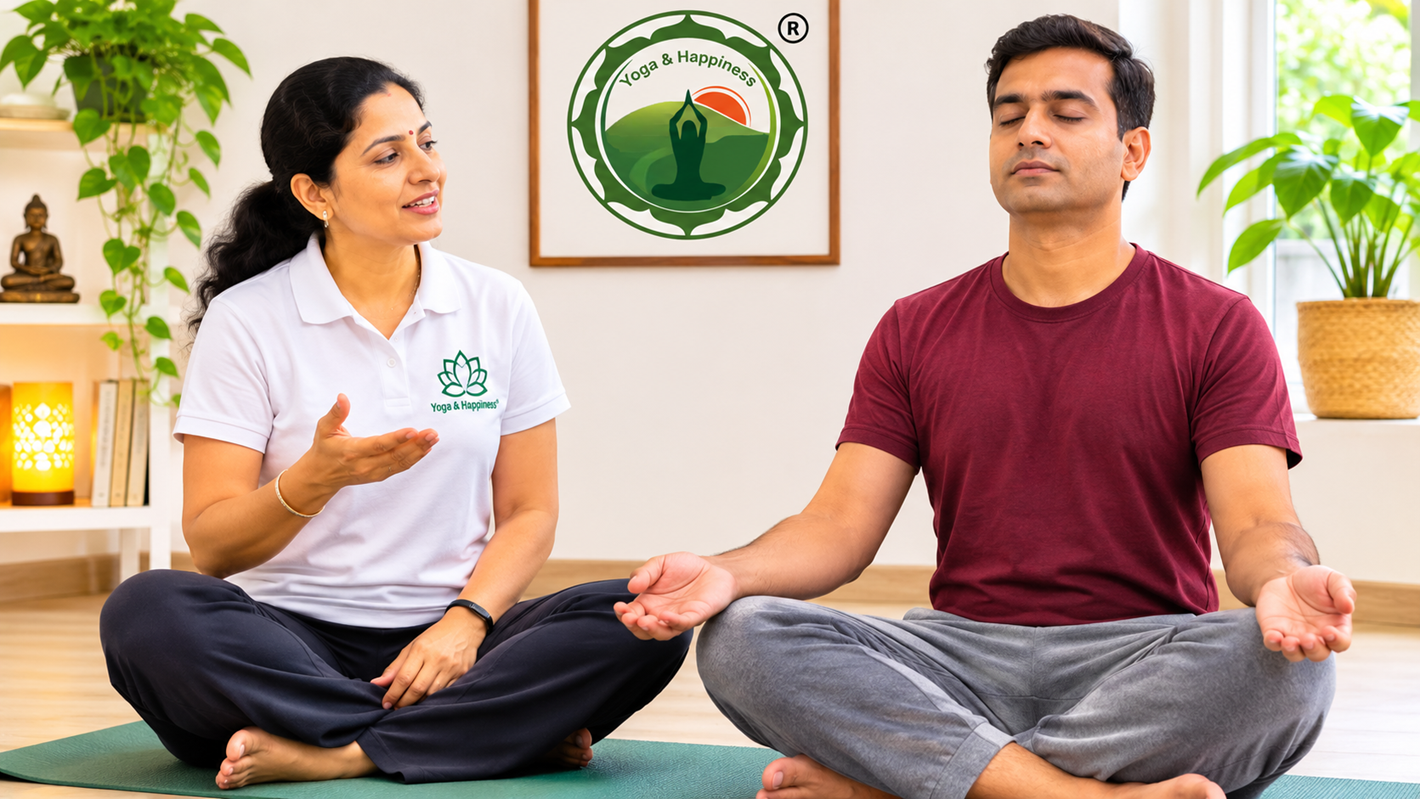
Minute 1: Find a comfortable position. Sit in a chair or on the floor with adequate support. Keep your spine comfortably upright and relax your shoulders. There is no need to force a rigid posture.
Minute 2: Observe natural breathing. Notice the movement of your chest or abdomen. Do not try to change the breath immediately.
Minute 3: Begin gentle breath regulation. If comfortable, inhale softly for approximately four seconds and exhale for approximately five seconds. Use a shorter or more natural rhythm if this feels difficult.
Minute 4: Continue without strain. Keep your breathing quiet and comfortable. Avoid taking excessively deep breaths, forcing the exhalation, or holding your breath.
Minute 5: Return to natural breathing. Release the counting, breathe normally, and notice how you feel before standing up.
The counting pattern is a practical teaching suggestion, not a clinically established prescription. Stop if you experience dizziness, breathlessness, chest discomfort, or increasing anxiety.
Common Mistakes to Avoid
Beginners sometimes assume that slower breathing is always better. That is not necessarily true.
Forcing the breath to become unusually slow can cause discomfort. Taking repeated oversized breaths may also contribute to light-headedness.
Another common mistake is introducing breath retention before the student has developed relaxed, comfortable breathing.
An instructor should prioritize ease, awareness, and individual response rather than a fixed breathing target.
Is Nadi Shodhana the Same as Slow Breathing?
Not exactly.
Nadi Shodhana is a traditional pranayama technique involving alternate-nostril breathing, with variations in rhythm and retention.
Slow breathing is a broader physiological description. A person can practise slow breathing without alternating nostrils, and alternate-nostril breathing is not necessarily performed slowly.
For a new student, these distinctions matter. Different practices require different instructions and precautions.
Who Should Seek Professional Guidance?
People with significant respiratory or cardiovascular conditions, recurrent fainting, unexplained breathlessness, or other relevant medical concerns should seek advice from an appropriate healthcare professional before attempting structured breath-control exercises.
People who experience panic symptoms may find close attention to breathing uncomfortable. They should not be pressured to continue.
Pregnant practitioners and individuals recovering from illness or surgery may also require modifications.
Seek urgent medical care for severe breathlessness, chest pain, or fainting rather than attempting to manage these symptoms with pranayama.
How Yoga Teachers Can Introduce Breathing Safely
Good instruction begins with observation.
A teacher should explain the purpose of the exercise, demonstrate an easy breathing rhythm, and invite students to remain within their comfort level.
Teachers should avoid promising that pranayama will cure anxiety, hypertension, insomnia, or other medical conditions.
They should also distinguish between traditional yogic explanations, emerging physiological research, and established clinical treatments.
At Yoga & Happiness, this distinction is relevant to both general yoga classes and professional teacher training. Students benefit from learning not only how to demonstrate a practice but also when to modify it, stop it, or refer someone for medical advice.
Frequently Asked Questions
Can I practise slow breathing every day?
Many healthy adults can incorporate a brief, comfortable breathing exercise into their routine. Begin gently and stop if symptoms occur.
Is six breaths per minute necessary?
No. Six breaths per minute is commonly studied, but it is not an appropriate target for every person. Comfortable breathing is more important than achieving a specific number.
Can pranayama replace anxiety medication?
No. Breathing exercises may be used as complementary wellness practices but should not replace prescribed medication or professional mental healthcare.
Should beginners practise breath retention?
Beginners do not need breath retention to learn relaxed breathing. More demanding techniques should be introduced only when appropriate and under qualified guidance.
Is online instruction suitable?
Online instruction can be useful for introductory breathing practices when the teacher provides clear guidance, observes the student’s response where possible, and explains safety precautions.
Final Thoughts
Slow breathing offers a simple opportunity to develop awareness and relaxation. Research suggests potentially useful physiological and psychological effects, but the evidence does not justify cure claims or one-size-fits-all breathing prescriptions.
The most useful starting point is a gentle, comfortable practice supported by sound instruction.
For personalized guidance, explore
Yoga & Happiness Personalized Online Yoga Sessions,
or contact the institute on
9883061986.
