×
03 Jan 2026
Back pain, neck pain, and knee pain are no longer age-related problems. They are lifestyle-related. Long sitting hours, mobile and laptop use, poor posture, lack of movement, stress, and incorrect exercise habits are affecting people across all age groups.
Painkillers may reduce discomfort temporarily, but they do not correct the cause. Yoga works at the root by improving posture, muscle balance, joint stability, breathing, and nervous system regulation.
This blog explains how yoga helps back pain, neck pain, and knee pain safely, and how to practice without creating further damage.
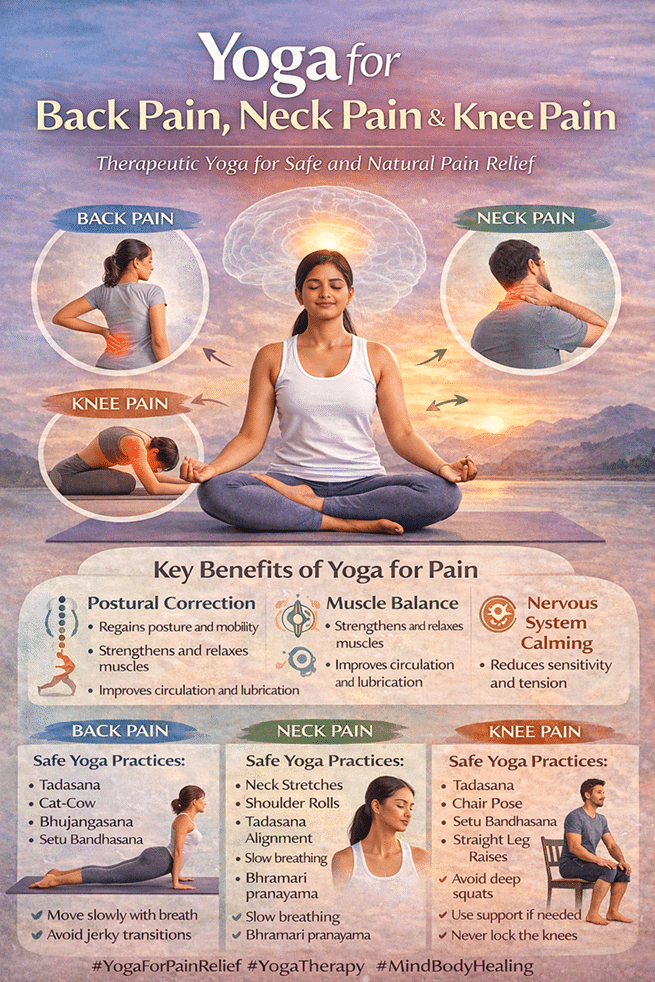
Yoga reduces pain through four core mechanisms:
Postural correction – reduces abnormal load on joints
Muscle balance – strengthens weak muscles and relaxes tight ones
Joint nourishment – improves circulation and joint lubrication
Nervous system calming – reduces pain sensitivity and muscle guarding
Pain decreases when the body regains balance and confidence in movement.
Weak core muscles
Tight hamstrings and hip flexors
Poor sitting posture
Long hours of inactivity
Stress-related muscle tension
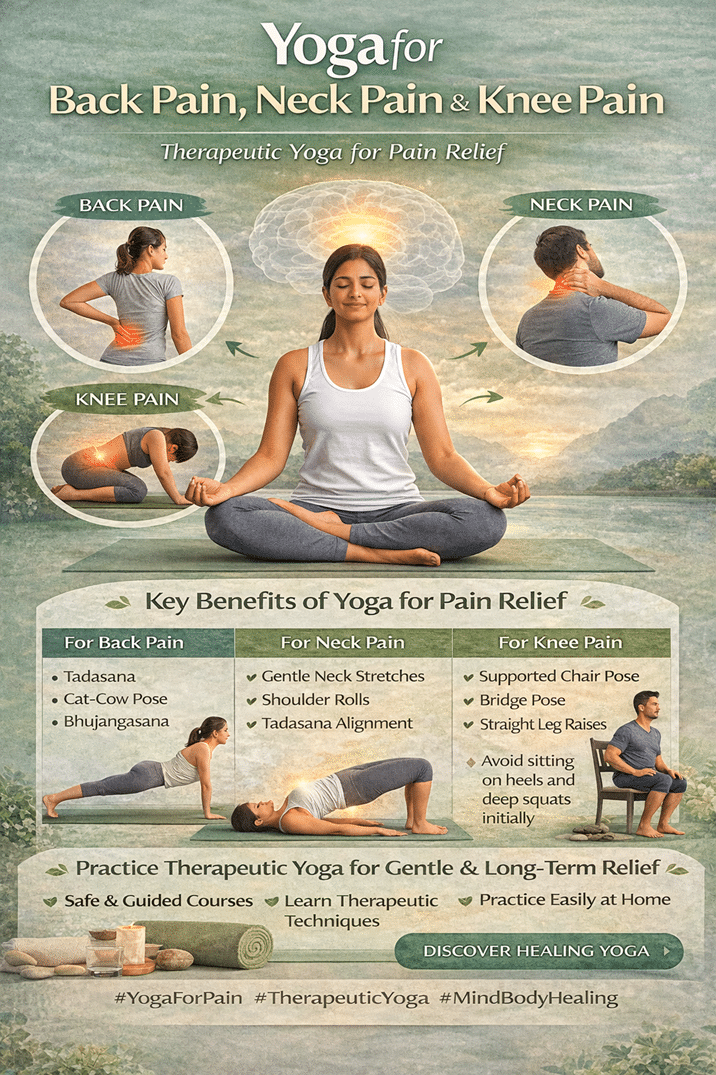
Recommended yoga practices for back pain
Safe yoga asanas
Tadasana (postural awareness)
Cat–Cow (slow and controlled)
Bhujangasana (gentle, not forced)
Setu Bandhasana
Ardha Uttanasana
Shavasana with breath awareness
Key guidelines
Move slowly with breath
Avoid jerky or fast transitions
Focus on spinal length, not depth
Yoga strengthens the spine-supporting muscles and reduces unnecessary strain.
Excessive mobile and laptop use
Forward head posture
Shoulder tension due to stress
Improper pillow and sleeping position
Gentle movements
Neck flexion and extension
Side bending (slow)
Shoulder rolls
Tadasana with chin alignment
Breathing support
Diaphragmatic breathing
Bhramari pranayama
Neck pain improves when movement is gentle and awareness-based.
Weak quadriceps and hamstrings
Tight calves and hip muscles
Incorrect walking mechanics
Previous injury or overuse
Excess body weight
Recommended asanas
Tadasana
Chair pose (with support)
Setu Bandhasana
Supta Padangusthasana
Straight leg raises (yogic style)
Important precautions
Avoid deep squats initially
Avoid sitting on heels if painful
Use cushions or blocks for support
Never lock the knees
Yoga improves knee stability by strengthening surrounding muscles.
Chronic pain is closely linked with stress and nervous system overactivity.
Helpful breathing practices:
Slow diaphragmatic breathing
Nadi Shodhana
Bhramari
Pranayama reduces muscle tension, improves circulation, and lowers pain sensitivity.
| Yoga | Regular Exercise |
|---|---|
| Alignment-focused | Repetition-focused |
| Breath-led | Effort-led |
| Calms nervous system | May overstimulate |
| Therapeutic pacing | Often performance-driven |
This is why yoga is safer and more sustainable for chronic pain.
Copying advanced poses from videos
Practicing through pain
Ignoring alignment
Inconsistent practice
Expecting instant results
Pain relief improves with regular, mindful practice, not intensity.
Yoga for pain relief is ideal for:
Office professionals
Seniors
Beginners afraid of exercise
People with chronic joint pain
Post-injury recovery (with guidance)
Yoga adapts to the body. The body should never be forced to adapt to yoga.
Seek professional guidance if you have:
Severe disc issues
Recent surgery
Acute inflammation
Advanced arthritis
Yoga should be supportive, never painful.
If you are dealing with ongoing back pain, neck pain, or knee pain, practicing randomly from videos often leads to mistakes and inconsistency.
All programs are guided by certified yoga professionals and designed with safety and alignment as priorities.
Pain is a signal, not an enemy. Ignoring it only makes it louder.
Yoga teaches the body how to move, breathe, and live without creating pain again.
👉 Explore guided yoga programs
👉 Learn safe, therapeutic yoga practices
👉 Practice from home with proper instruction
Yoga does not promise instant pain relief. It offers something better: long-term correction and confidence in movement.
When practiced correctly, yoga becomes one of the safest and most effective tools for managing back pain, neck pain, and knee pain naturally.
Get more news from us by subscribe your email address.

All Rights Reserved Copyrights 2021 | Powered by onqanet technologies pvt ltd
