×
28 Dec 2025
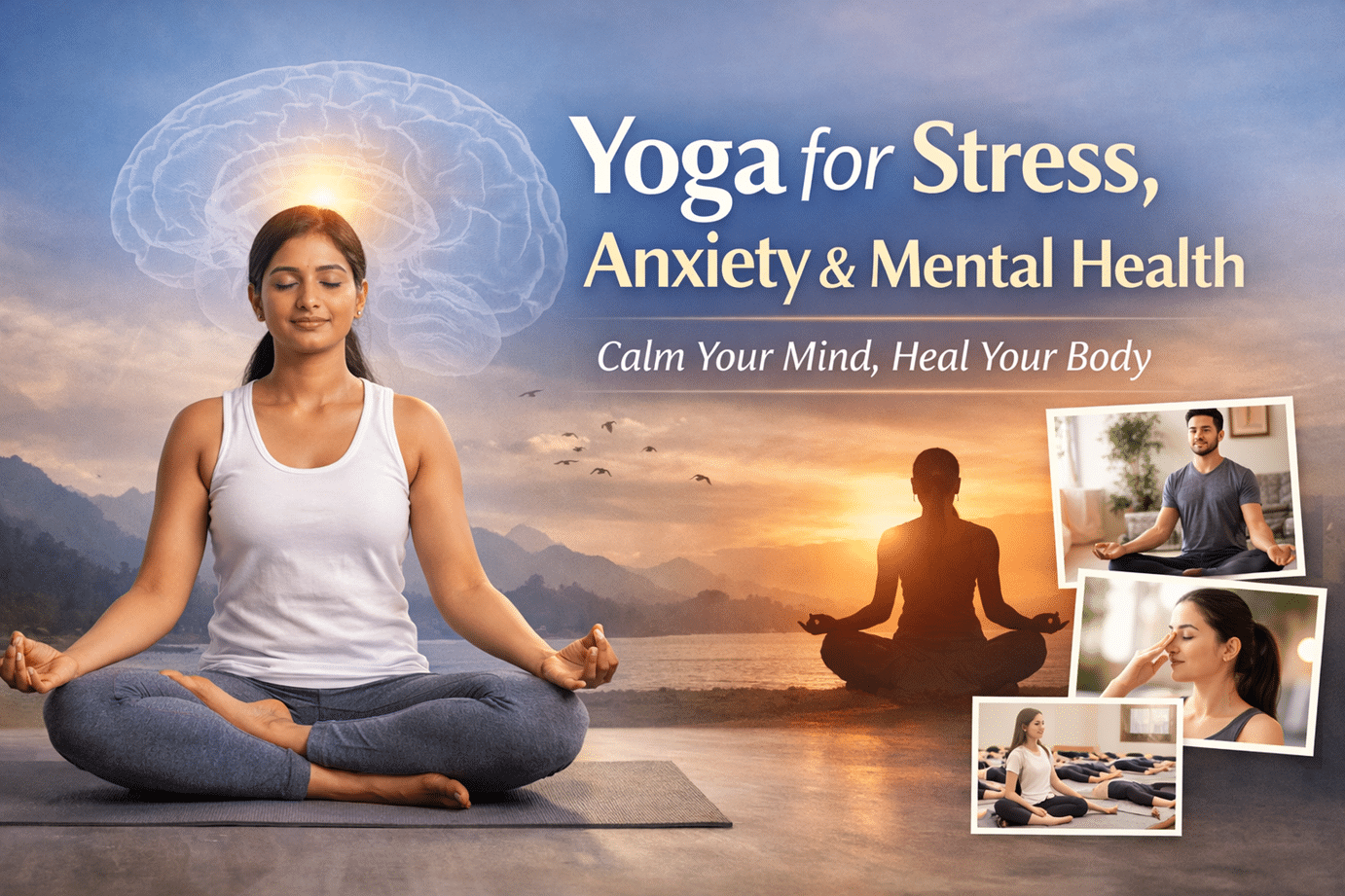
Stress and anxiety are no longer occasional problems. They have become a constant background state for many people. Long working hours, job insecurity, screen addiction, irregular sleep, emotional overload, and lack of physical movement keep the nervous system stuck in survival mode.
Over time, this chronic stress shows up as anxiety, panic attacks, poor sleep, irritability, lack of focus, digestive issues, and emotional exhaustion. Medication may suppress symptoms, but it rarely trains the body and mind to regulate themselves.
Yoga offers a structured, time-tested system to restore balance at the level of the body, breath, nervous system, and mind. This is not motivational talk. It is physiology, psychology, and consciousness working together.
In classical yoga, mental suffering is linked to disturbed chitta vritti (mental fluctuations) and irregular flow of prana. When the breath is shallow and irregular, the mind becomes restless. When the mind is restless, emotional instability follows.
Yoga does not isolate mental health from the body. It works on four interconnected layers:
Muscular and fascial tension
Breathing pattern
Autonomic nervous system
Thought and emotional patterns
Correct yoga practice restores rhythm across all four.
From a modern medical perspective, chronic stress overstimulates the sympathetic nervous system and the HPA axis. This leads to elevated cortisol, reduced serotonin, disturbed sleep cycles, and poor emotional regulation.
Research consistently shows that yoga:
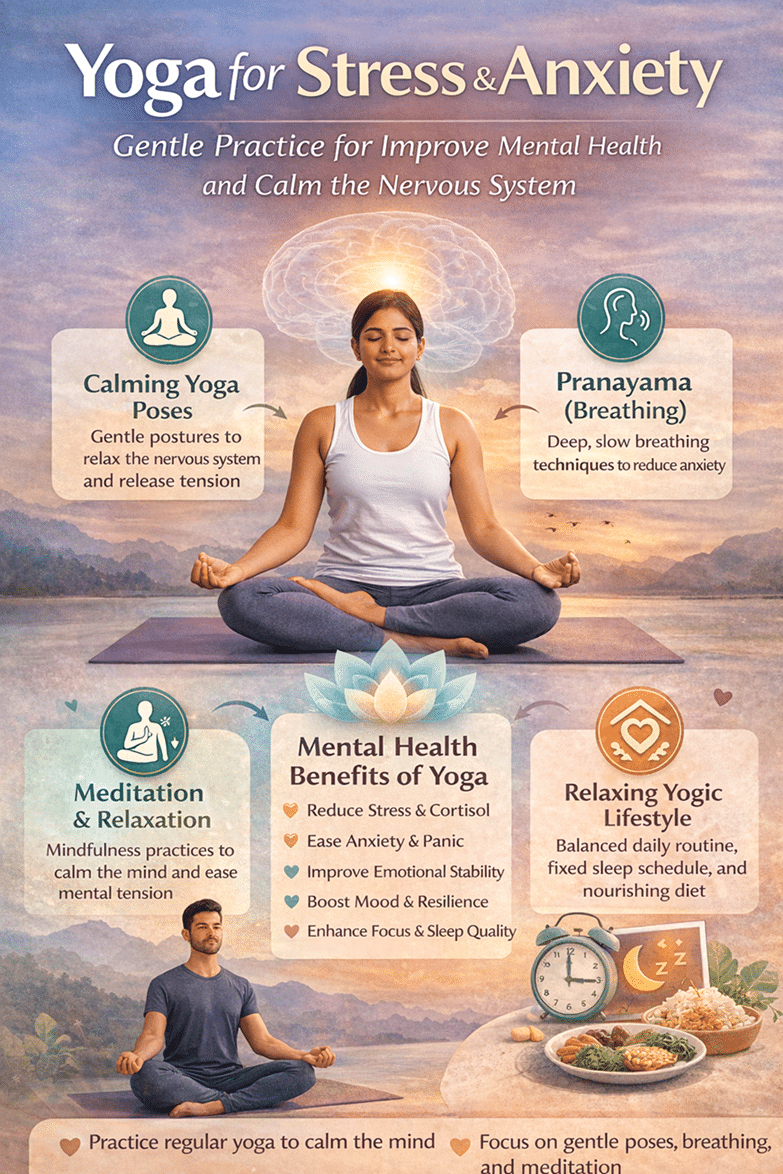
Reduces cortisol levels
Improves heart rate variability
Activates the parasympathetic nervous system
Increases GABA and serotonin activity
Improves sleep quality and emotional resilience
This is why yoga is increasingly recommended as a complementary approach for stress-related and anxiety-related disorders.
Asana is often misunderstood as exercise. In yoga, asana is a method to stabilize the body so the nervous system can relax and the mind can settle.
For stress and anxiety, slow and mindful postures are more effective than intense flows.
Tadasana with breath awareness
Balasana
Paschimottanasana (gentle)
Setu Bandhasana
Supta Baddha Konasana
Viparita Karani
Shavasana with guided relaxation
Postures should be held comfortably, with slow breathing and full awareness. Force creates resistance. Awareness creates release.
Breath is the bridge between body and mind. Changing the breath pattern changes emotional state almost immediately.
Regulates vagus nerve activity
Improves oxygen-carbon dioxide balance
Stabilizes heart rhythm
Reduces mental agitation
Nadi Shodhana
Bhramari
Slow diaphragmatic breathing
Sheetali and Sheetkari
Forceful practices should be avoided during anxiety phases unless supervised by a trained teacher.
Meditation is not about stopping thoughts. It is about learning not to be controlled by them.
Regular meditation practice:
Improves emotional regulation
Enhances focus and clarity
Reduces rumination
Builds psychological resilience
Beginner-friendly practices include breath awareness, body scan meditation, mantra meditation, and guided mindfulness.
Ten minutes daily, practiced consistently, produces measurable changes over time.
Yoga acts as a supportive therapy for anxiety disorders by retraining the nervous system.
Key principles:
Slow pacing
Grounding postures
Longer exhalation
Regular routine
Consistency is more important than duration. Short daily practice works better than irregular long sessions.
For mild to moderate depression, yoga supports recovery by:
Improving circadian rhythm
Enhancing neuroplasticity
Increasing bodily awareness
Reducing mental inertia
Morning practice, gentle movement, sunlight exposure, and breath awareness are especially helpful.
Yoga should complement, not replace, professional care when needed.
Mental health does not improve through practice alone if lifestyle remains chaotic.
Key yogic habits:
Fixed sleep and wake time
Reduced stimulants
Simple, warm, nourishing food
Reduced screen exposure
Daily self-reflection
Yoga is a lifestyle discipline, not a one-hour activity.
Practicing too aggressively
Ignoring breath awareness
Expecting instant results
Practicing irregularly
Treating yoga only as physical fitness
Mental health improves through patience, rhythm, and awareness.
This approach is suitable for:
Working professionals
Students under academic pressure
Homemakers experiencing emotional fatigue
Seniors dealing with anxiety or loneliness
Yoga teachers facing burnout
No prior yoga experience is required.
If this approach resonates with you, structured guidance makes a real difference. Practicing randomly from videos often leads to inconsistency or incorrect technique.
Online Yoga for Stress & Mental Health
Guided Pranayama & Meditation Sessions
Each program is guided by certified yoga professionals and designed according to classical yogic principles and modern understanding.
If stress, anxiety, or emotional imbalance is affecting your daily life, ignoring it will not make it disappear. Training your nervous system is a skill, and yoga is one of the safest ways to learn it.
👉 Explore our guided yoga programs for mental health
👉 Join online classes from the comfort of your home
👉 Learn yoga not just for flexibility, but for clarity and stability
Yoga Sutras of Patanjali
Hatha Yoga Pradipika
Bhagavad Gita
Streeter et al., Journal of Alternative and Complementary Medicine
Frontiers in Psychiatry, Systematic Reviews on Yoga and Anxiety
JAMA Internal Medicine, Meditation and Stress Reduction
The Principles and Practice of Yoga in Health Care
FAQ’s:
Yoga reduces stress by calming the nervous system, improving breathing patterns, lowering cortisol levels, and helping the mind respond calmly instead of reacting to pressure.
Yes. Research shows that yoga improves heart rate variability, reduces stress hormones, and activates the parasympathetic nervous system, which supports relaxation and emotional balance.
Gentle yoga postures, slow pranayama such as Nadi Shodhana and Bhramari, and guided meditation are most effective for stress relief.
Yes. Yoga for stress is suitable for complete beginners. It focuses on slow movements, breathing awareness, and relaxation rather than physical intensity.
Many people feel calmer immediately after practice. Long-term stress reduction usually occurs within 2–4 weeks of regular yoga practice.
Gentle pranayama practices are safe and helpful for anxiety. Forceful breathing techniques should only be practiced under expert guidance.
Yes. Online yoga classes can effectively reduce stress when sessions are structured, guided by certified teachers, and focused on breath, relaxation, and awareness.
Practicing yoga 4–5 days a week for 20–40 minutes provides noticeable stress reduction. Consistency is more important than long sessions.
Yoga should be used as a supportive practice. It does not replace medical or psychological treatment when required, but it significantly improves stress management and emotional resilience.
Yoga for stress is beneficial for working professionals, students, homemakers, seniors, and anyone experiencing mental or emotional pressure.
Get more news from us by subscribe your email address.

All Rights Reserved Copyrights 2021 | Powered by onqanet technologies pvt ltd
